

Best for
Choose this downtown base if your plans mix SFMOMA, Union Square and Financial District meetings; it keeps varied city days within easy reach.
Please choose a hotel or destination from the list.
We couldn’t open your search results. Please try again.
Your private search
Finding exceptional stays
Best for
Choose this downtown base if your plans mix SFMOMA, Union Square and Financial District meetings; it keeps varied city days within easy reach.
What makes it special
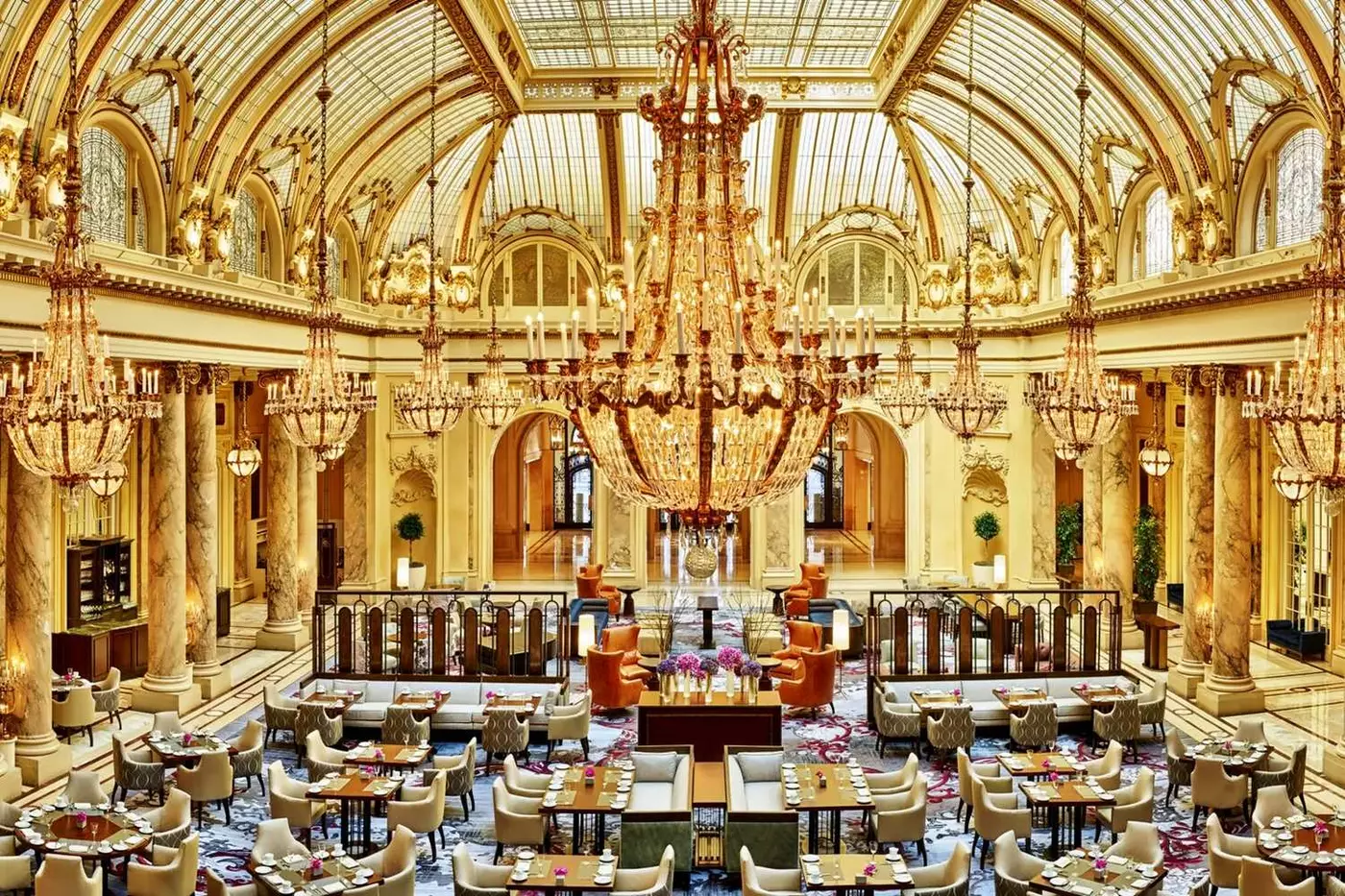
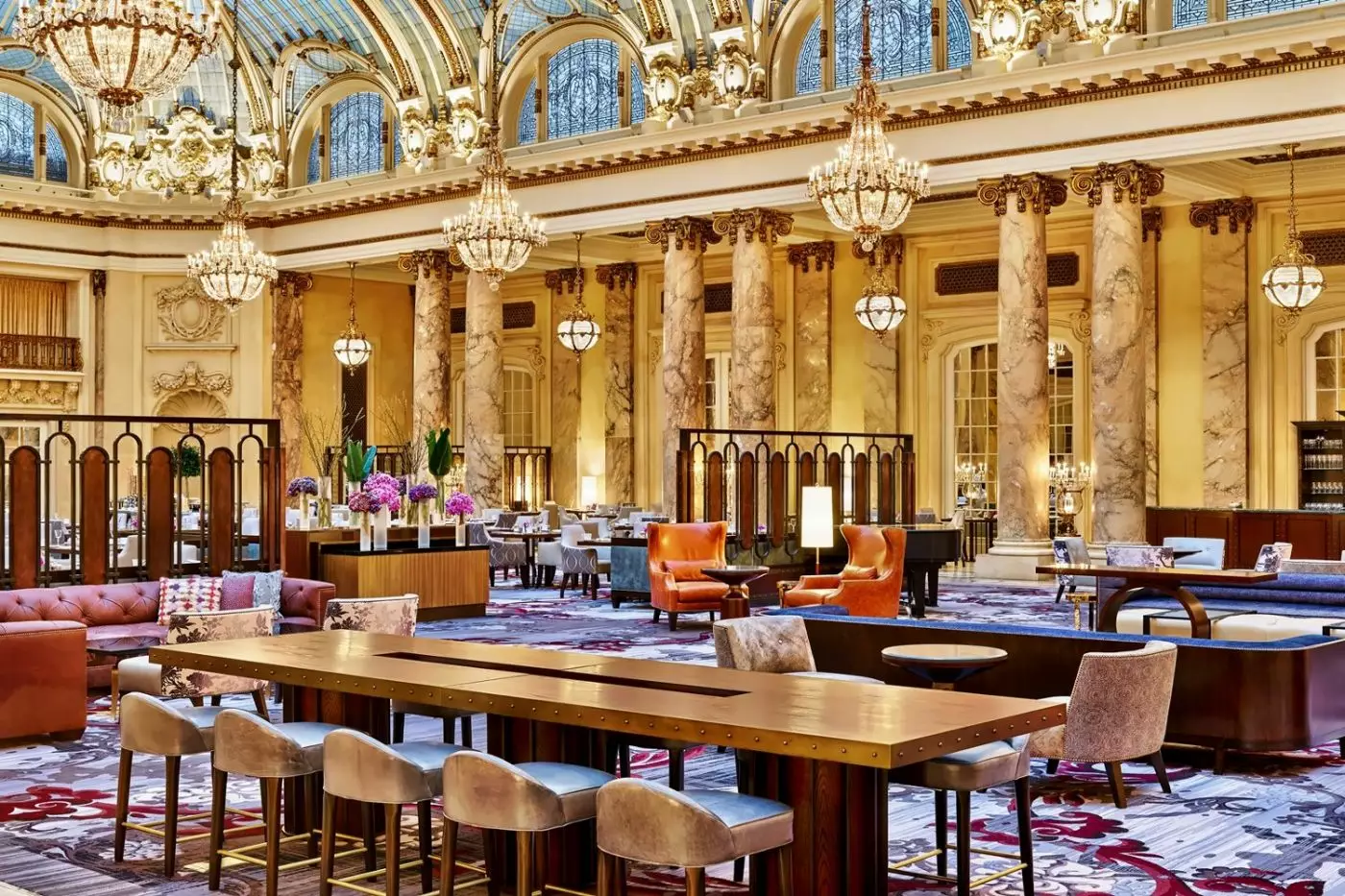
Check the Garden Court's current afternoon tea schedule and reserve ahead; its glass-domed setting makes an unhurried pause worth planning.
Room to consider
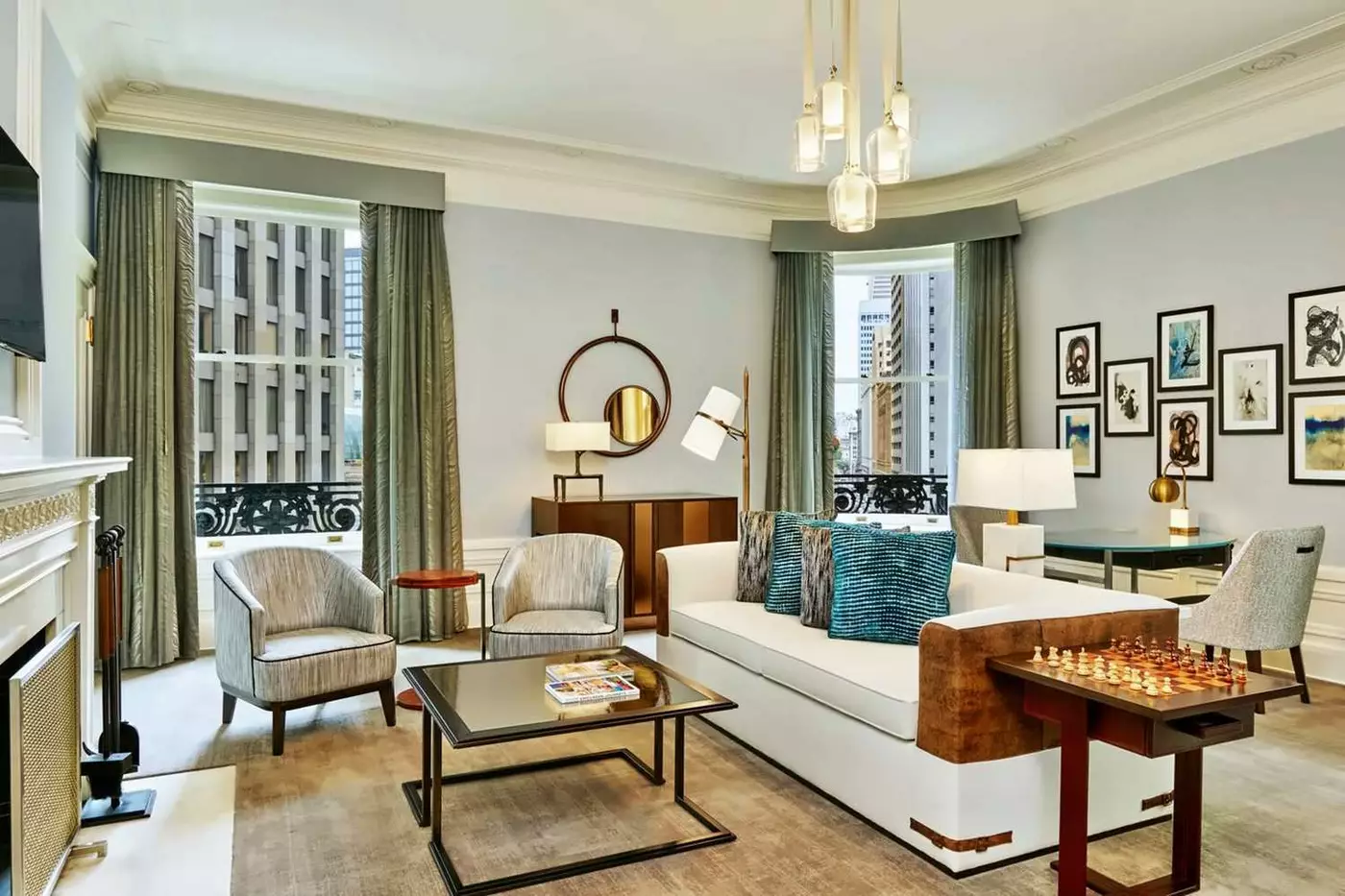
For a family city stay, consider the Superior Suite: its separate living room and sofa bed give everyone more space to reset.
Insider tip
For a car-free arrival, consider BART to Montgomery Street Station, which the hotel lists nearby; check the route and luggage needs beforehand.
Free membership gives you access to preferred rates, exclusive benefits and current promotions for your stay.
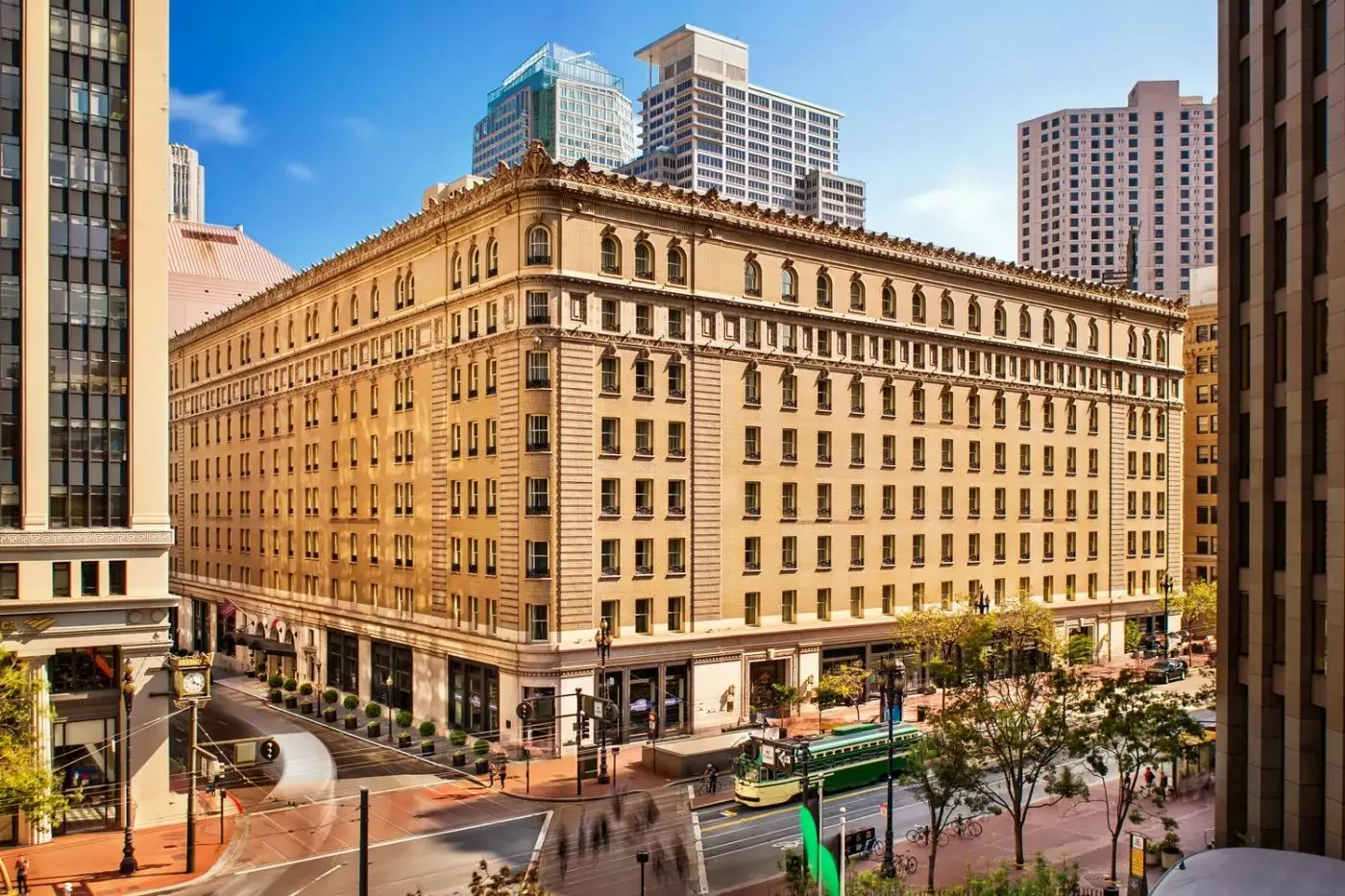
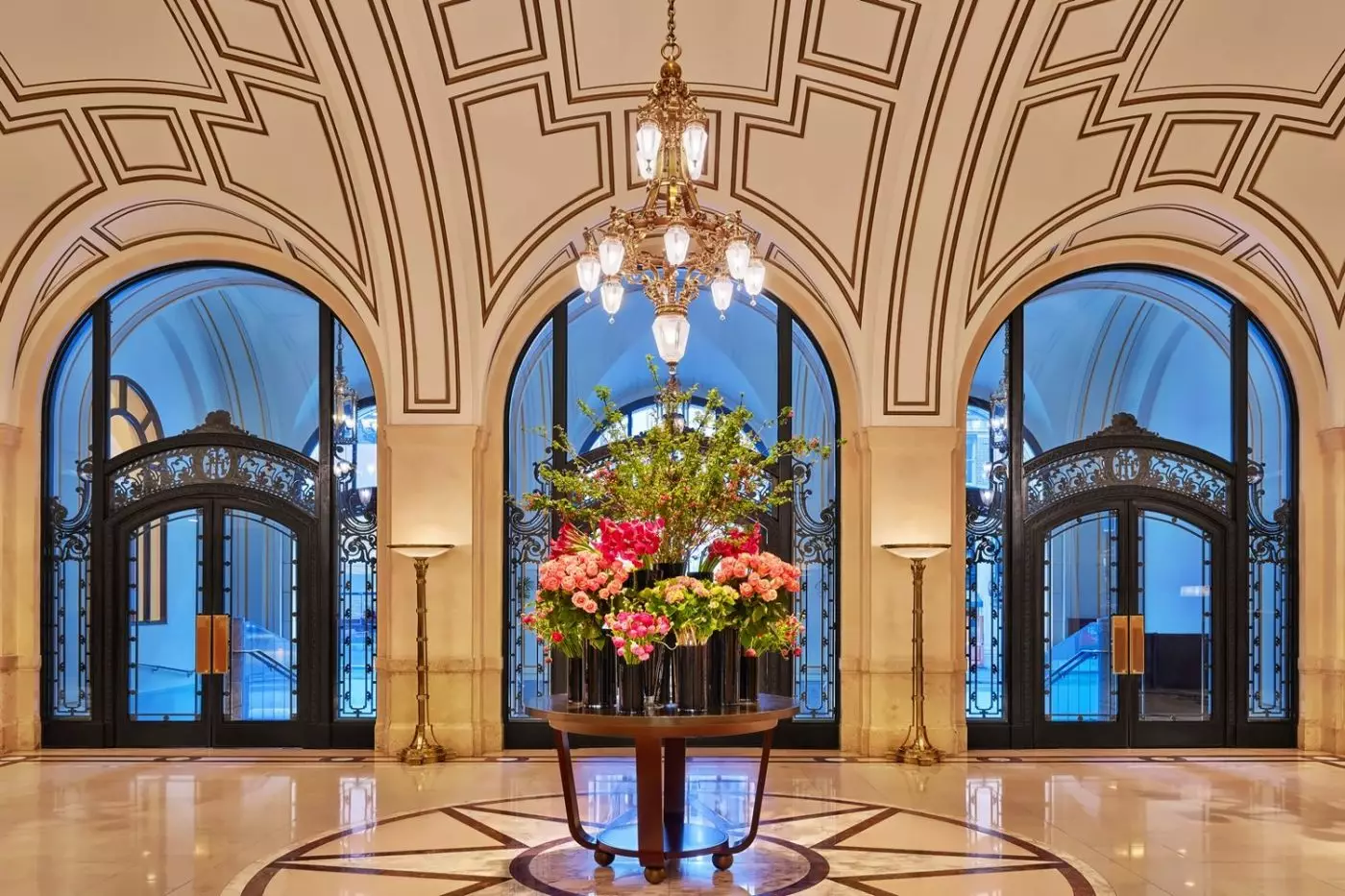
Palace Hotel San Francisco is one of the city's grand historic hotels, set on New Montgomery Street close to Market Street, SFMOMA, Union Square, the Financial District, and Montgomery Street Station. The original opened in 1875; the hotel guests enter today reopened in 1909 after the earthquake and fire. Its appeal is tangible rather than merely nostalgic: breakfast beneath the Garden Court's glass ceiling, a drink beside the Maxfield Parrish mural at Pied Piper, and an indoor pool to return to after a day downtown.
This is a large, central, full-service property, not a small hideaway. The public rooms are part of the stay, and the address works for meetings, museum visits, shopping, and city breaks. Travelers who want a waterfront outlook or a quiet residential setting should choose their base accordingly. For those drawn to San Francisco's hotel history but still needing practical access across the city, the Palace makes a persuasive case.
 556
556
 Charming
 Fitness
 Pool
Pool
 Culture
 City Vibe
 Wheelchair Accessible
 Connecting Rooms

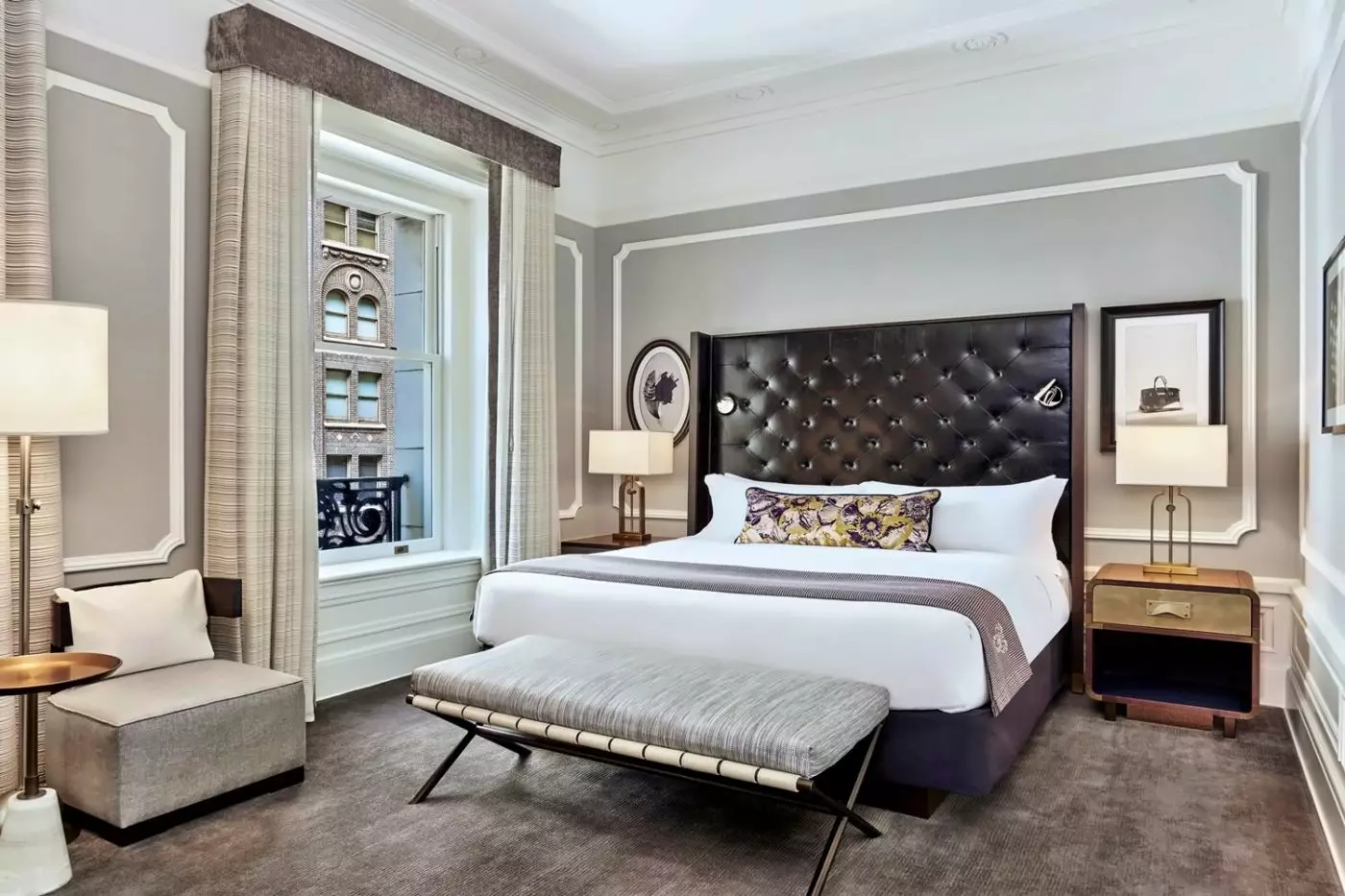
The Superior Room is a stylish and unique guest room with a king-sized bed. It offers a comfortable space with lush carpeting, layered textiles, and...

The Deluxe Room is a guest room with a king-size bed. It combines classic elegance with modern design, creating a cozy and inviting atmosphere. The...

The Grand Deluxe Room is a spacious and comfortable accommodation option. It features a luxurious King-sized bed and measures 360 square feet (32 square meters)....

The Junior Suite is a studio-style room with a limited city view. It overlooks the city and features 11-foot ceilings and crown molding, creating a...

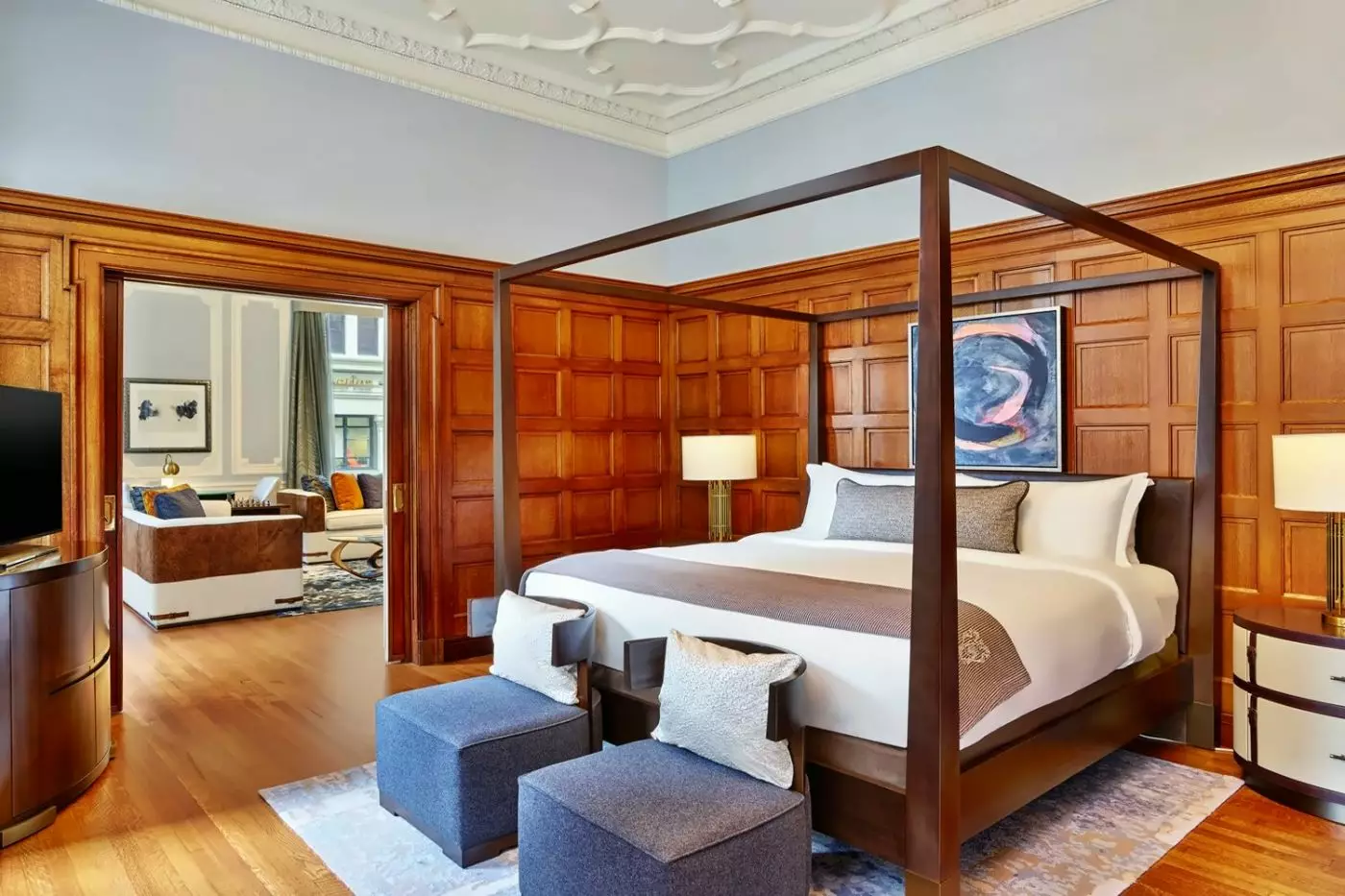
The Superior Suite is a 1-bedroom, 2-room retreat with a limited view. It provides a separate and cozy living space along with a luxurious bedroom....

The Deluxe Suite is a spacious and elegant 1-bedroom, 2-room suite with a limited view. It offers a glimpse into a luxurious era with its...

Experience stylish grandeur in the Palace Suite, a luxurious 1-bedroom suite with stunning city views. Adorned in deep plum and midnight blue, the suite boasts...

The Presidential Suite is a luxurious 1-bedroom accommodation with a magnificent view of Market Street. This opulent suite boasts large arched windows that provide a...
The hotel stands at 2 New Montgomery Street, near the meeting of SoMa and the Financial District. SFMOMA and Yerba Buena Gardens make an easy cultural pairing; Union Square brings shops and theaters into the same downtown itinerary. The Moscone Center and Financial District are useful reference points for a working visit, while the Ferry Building and Embarcadero can form a separate walking day. There is no need to treat each outing as a cross-city expedition.
Montgomery Street Station is close by for BART and Muni connections. That matters if you plan to arrive without a car or combine downtown appointments with other neighborhoods. San Francisco still asks for some route planning: hills, weather, luggage, and the hour of travel can change how a short distance feels. This address favors travelers comfortable using transit and walking, with rideshares for longer or late returns. It is a downtown base, not a substitute for staying beside the bay or Golden Gate Park.
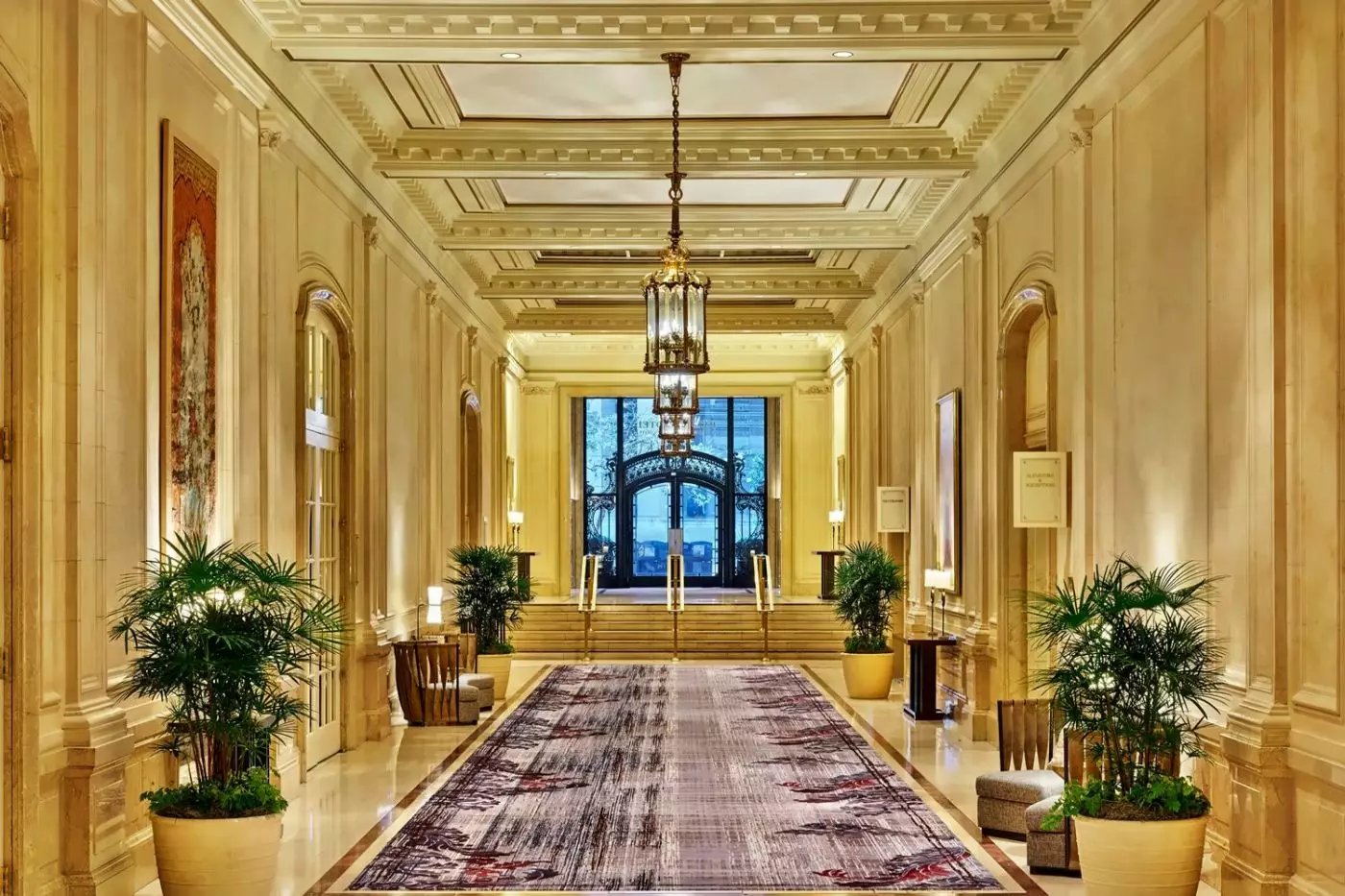
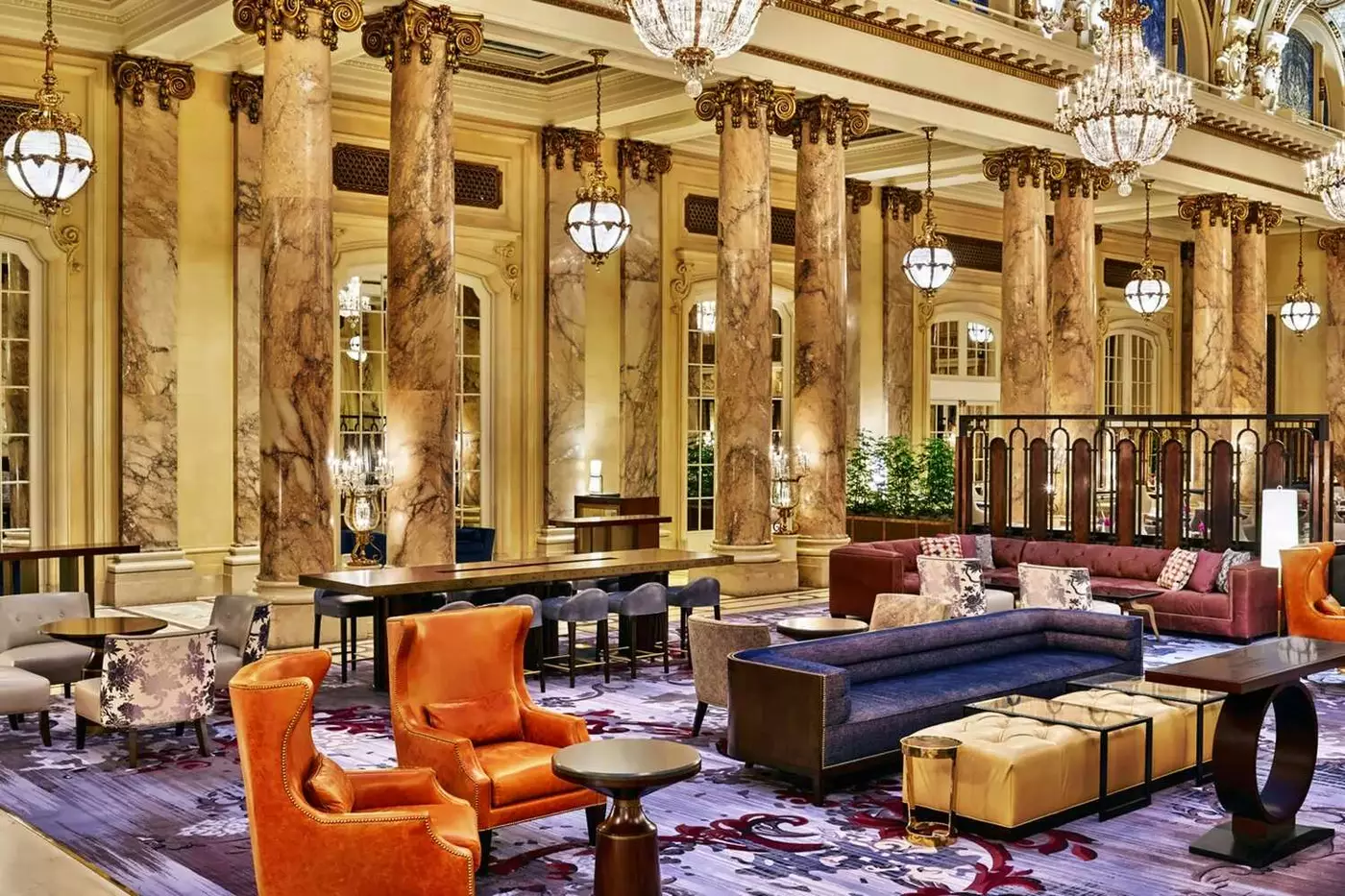
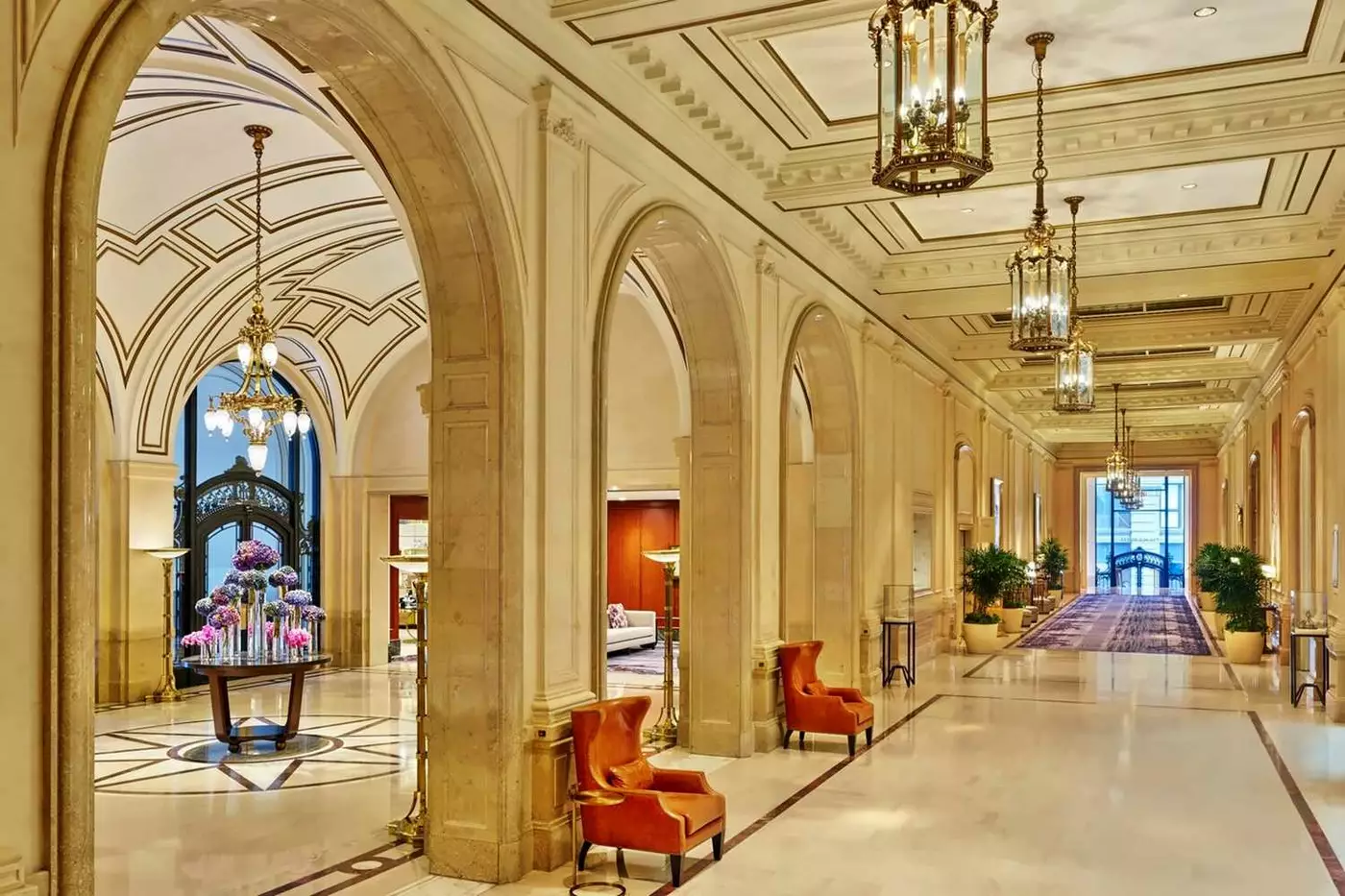
The Palace first opened in 1875. After the 1906 earthquake and fire, it reopened in 1909 with the Garden Court as its defining public room. The stained-glass ceiling, Austrian crystal chandeliers, and Italian marble columns give the space a scale that photographs only partly convey. It is worth looking up before sitting down: the room links an ordinary hotel morning to the city's rebuilding era.
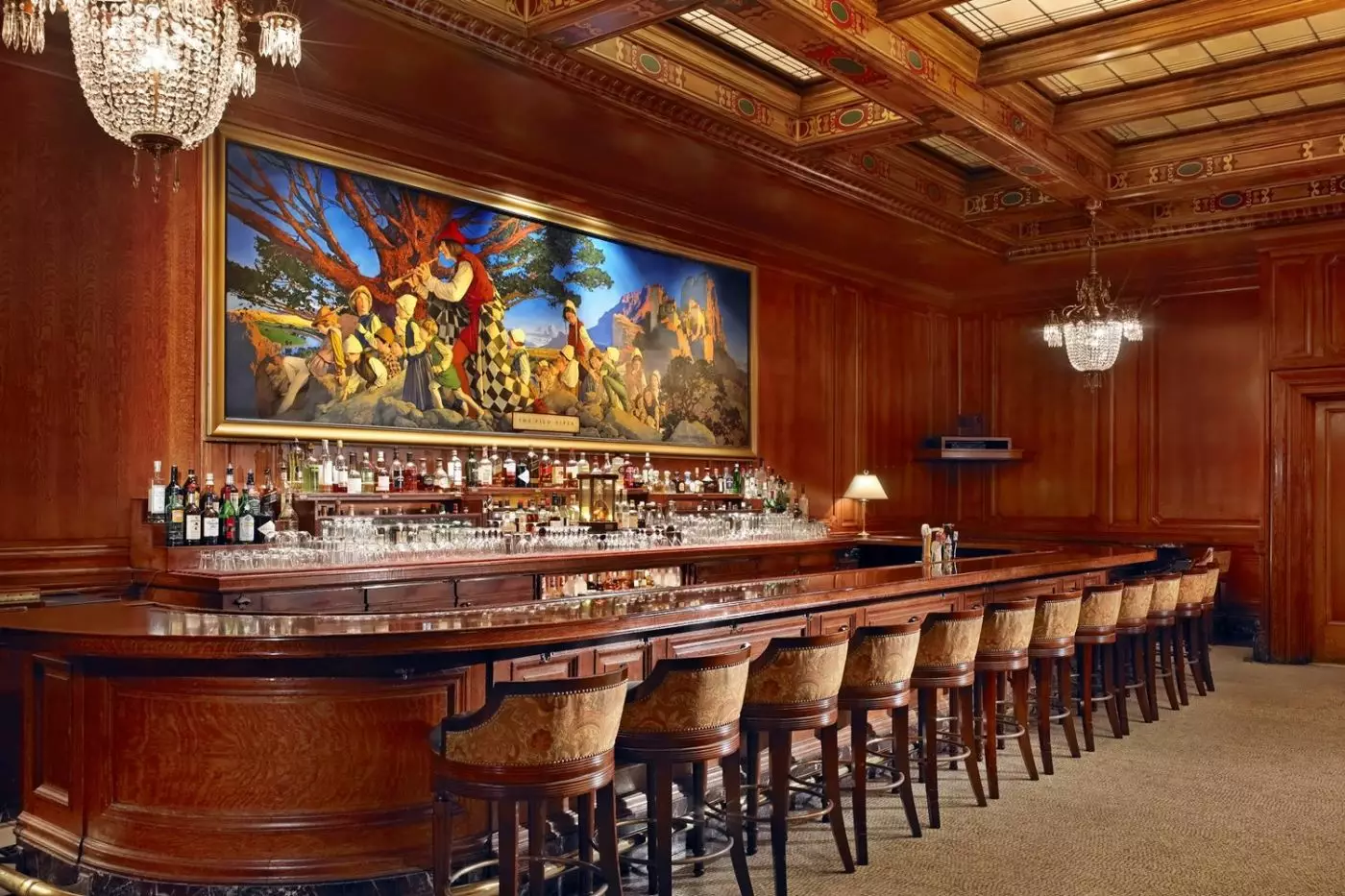
The history is not confined to a plaque. Maxfield Parrish's The Pied Piper, commissioned after the earthquake, has hung in the bar since the 1909 reopening. The hotel also maintains Landmark 18, a lobby-level display of photographs and objects from its past. These details give guests something specific to notice between outings. Yet the property has continued to change, including a restoration after the 1989 earthquake and a later room update. Expect a working city hotel with historic architecture, not a period reconstruction.
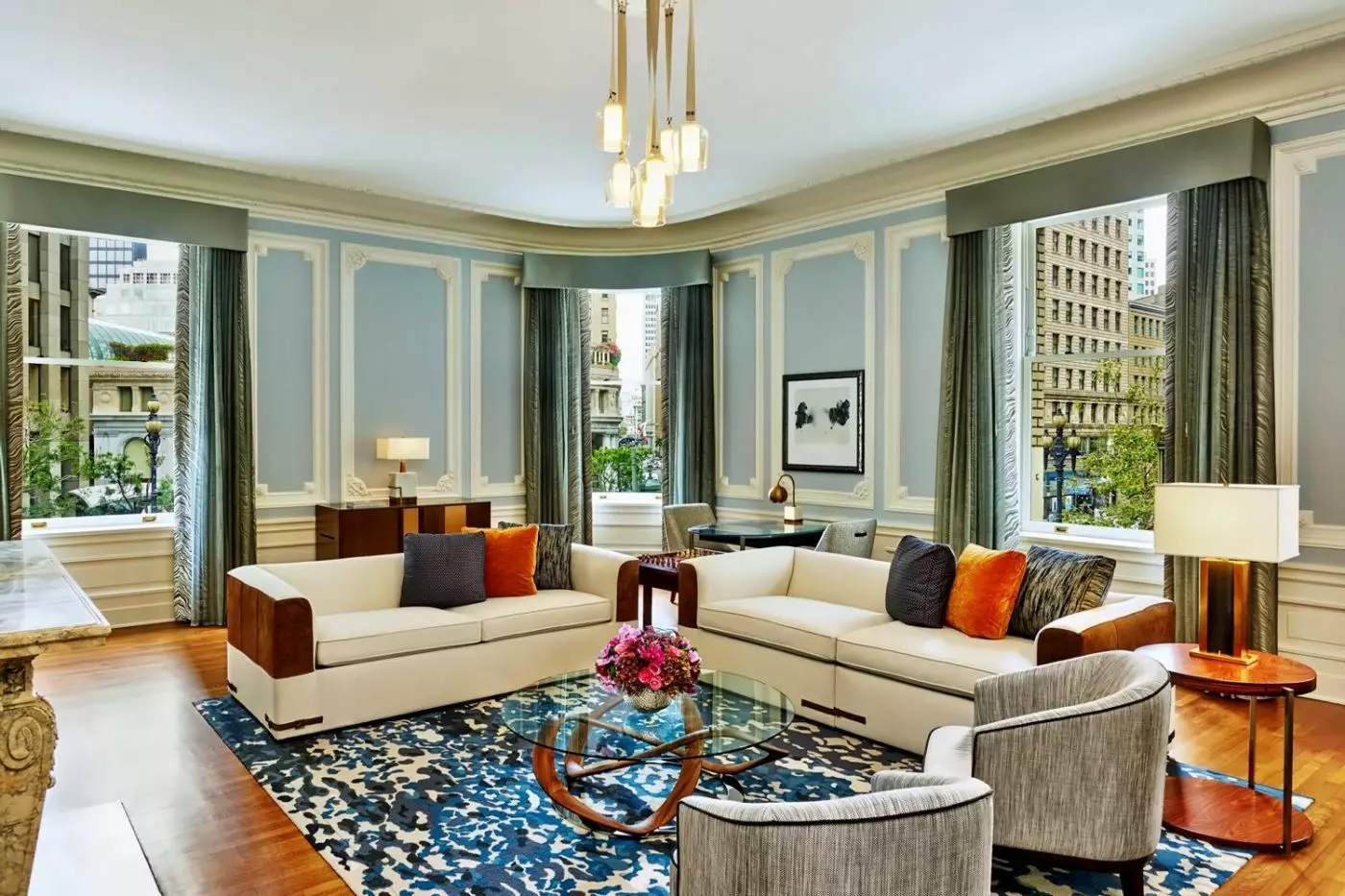
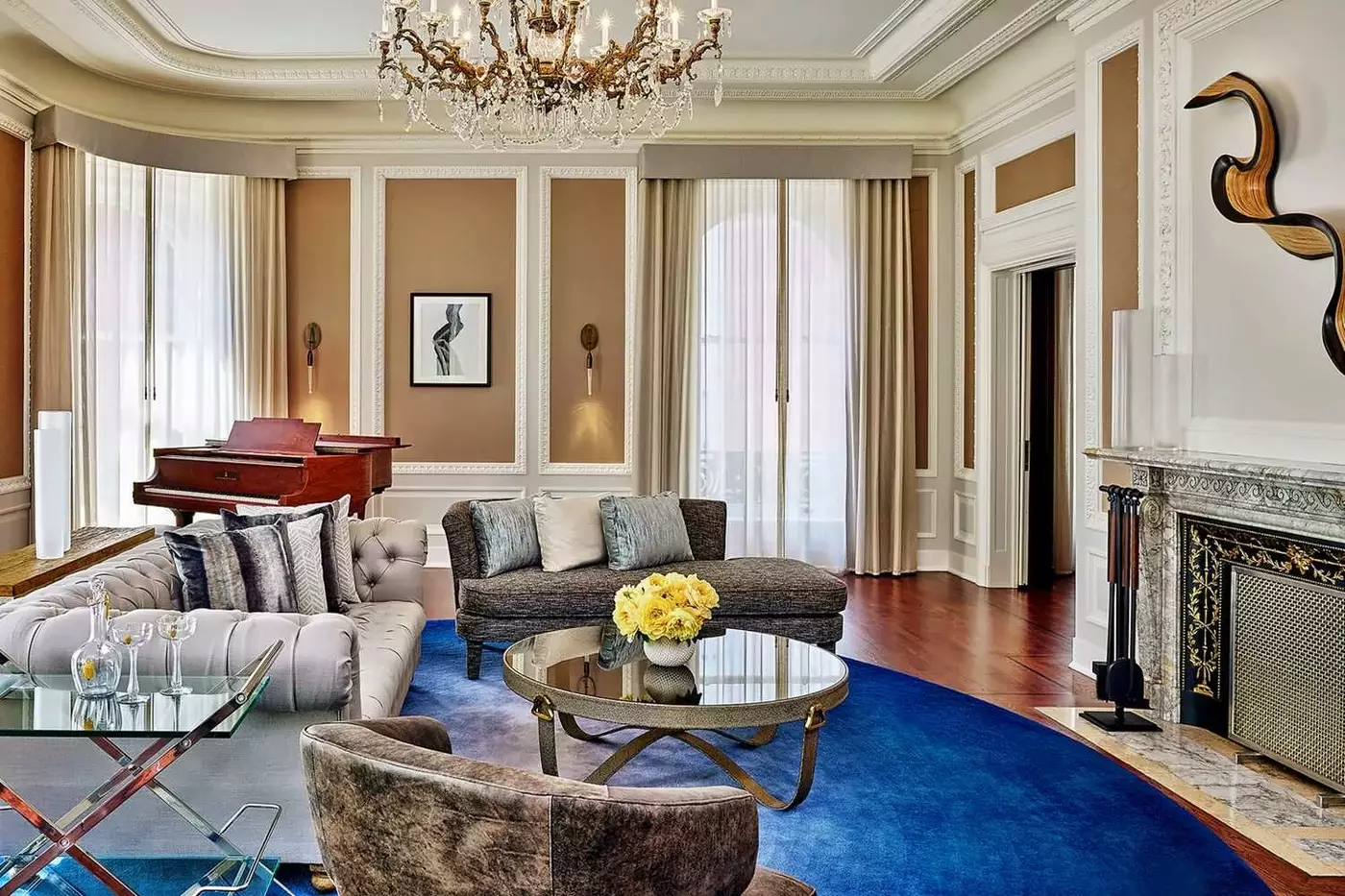
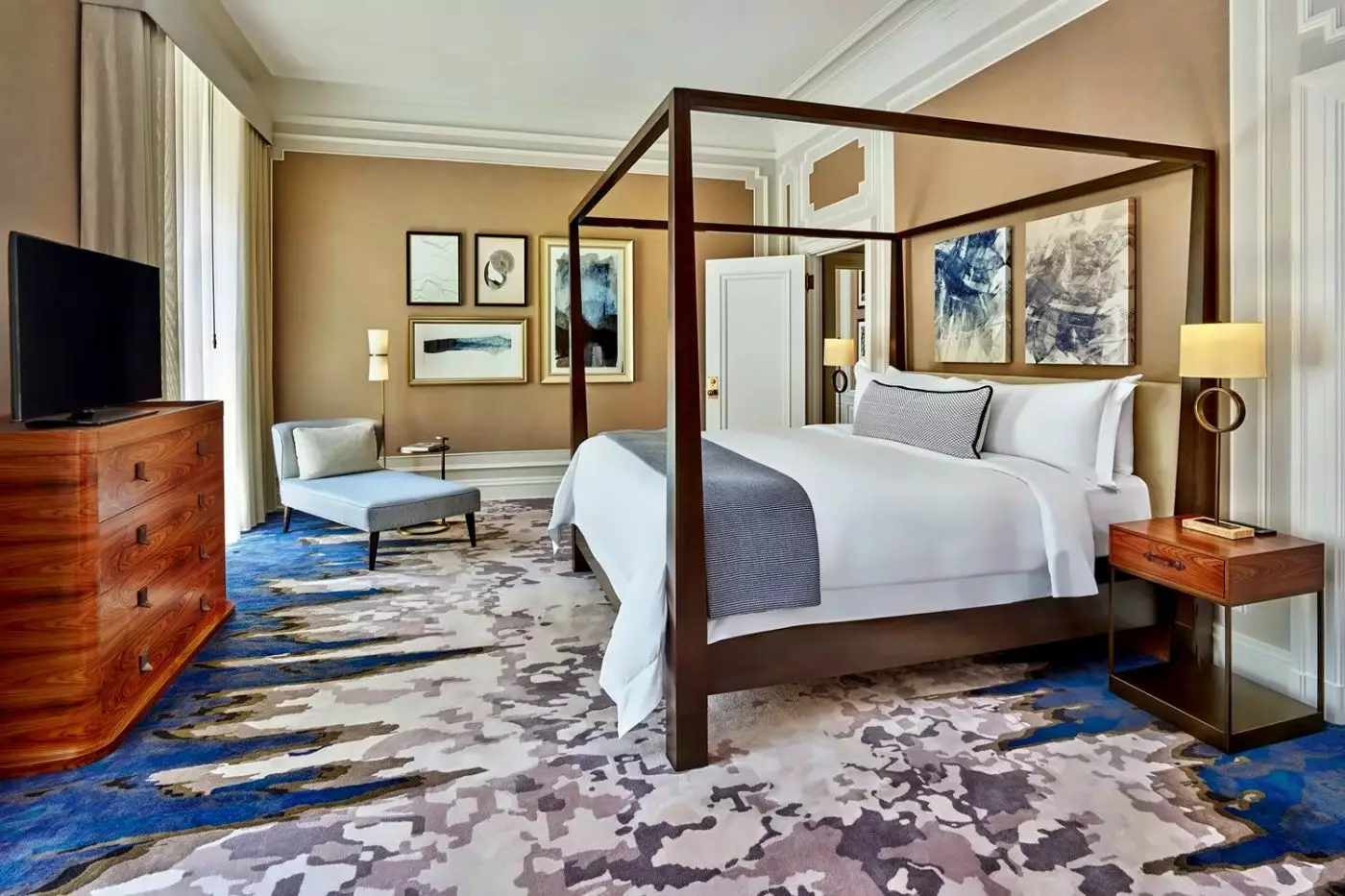
Rooms and suites pair traditional details with the equipment of a contemporary city stay. The hotel's own descriptions note high ceilings, large windows, marble bathrooms, and dedicated workspaces. Those qualities are not identical in every category, so it pays to compare the actual layout and view rather than rely on the building's reputation alone. A room can be a comfortable place to work and sleep, while the Garden Court and bar supply much of the Palace's wider character.
The room list runs from Superior, Deluxe, and Grand Deluxe rooms to Junior, Superior, Deluxe, Palace, and Presidential suites. A Deluxe King Room gives business travelers more space to work, according to the hotel; a Grand Deluxe Room is another option when a standard room feels tight. For a family stay, the Superior Suite's separate living area and sofa bed are more meaningful than a change in decorative finish. The Junior Suite is studio-style, so guests seeking a door between sleeping and sitting areas should look further up the suite range.
Views and bathroom configurations also deserve a closer look. The hotel describes city outlooks in many accommodations, but some categories have more limited views. Several room and suite listings specify a rain shower only, while the Palace and Presidential suites list bathtubs as well. If a tub, two beds, a separate lounge, or a particular outlook matters, confirm it against the exact bookable category. Palace Hotel is large enough that a deliberate room choice can improve the stay more than a vague request for something 'nice.'
The Garden Court remains the clearest reason to spend time inside the hotel. Beneath its stained-glass dome, breakfast feels distinct from a standard dining room, even on a day scheduled around meetings. The current hotel dining page lists breakfast, lunch, and afternoon tea. Tea is the more ceremonial way to experience the room; a morning meal is the easier fit for guests with a full city itinerary. Check the current service and reserve when the Garden Court is central to your plans.
Its scale also changes the atmosphere of the hotel. This is not an intimate dining room tucked away for overnight guests. Locals, events, and visitors share one of the property's most recognizable spaces. At busy times, that public energy is part of the scene; guests seeking complete quiet may prefer to make their visit at a less crowded hour. The original copy's instinct was right: the Palace is most rewarding when the building itself is allowed to shape the day.
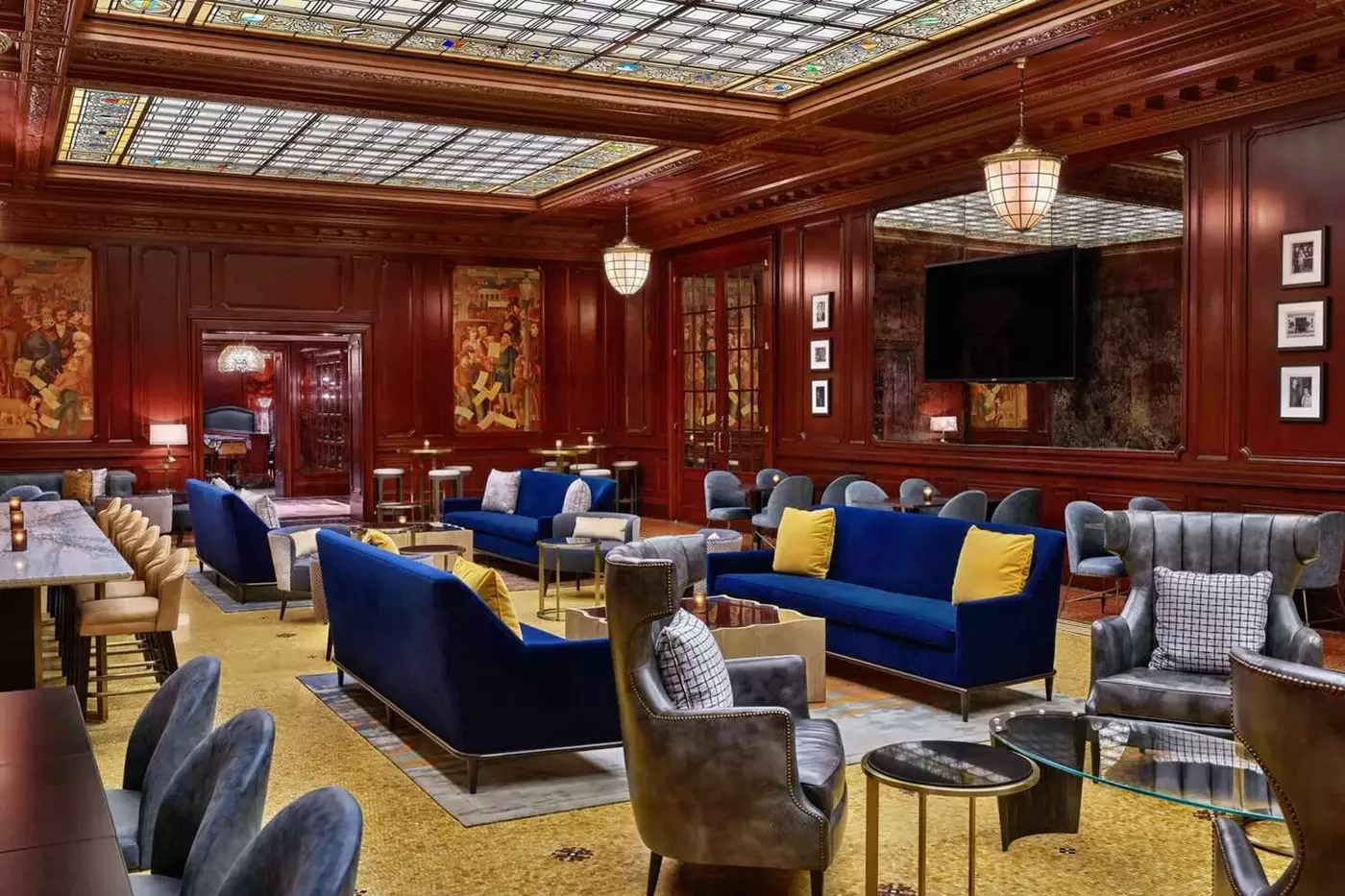
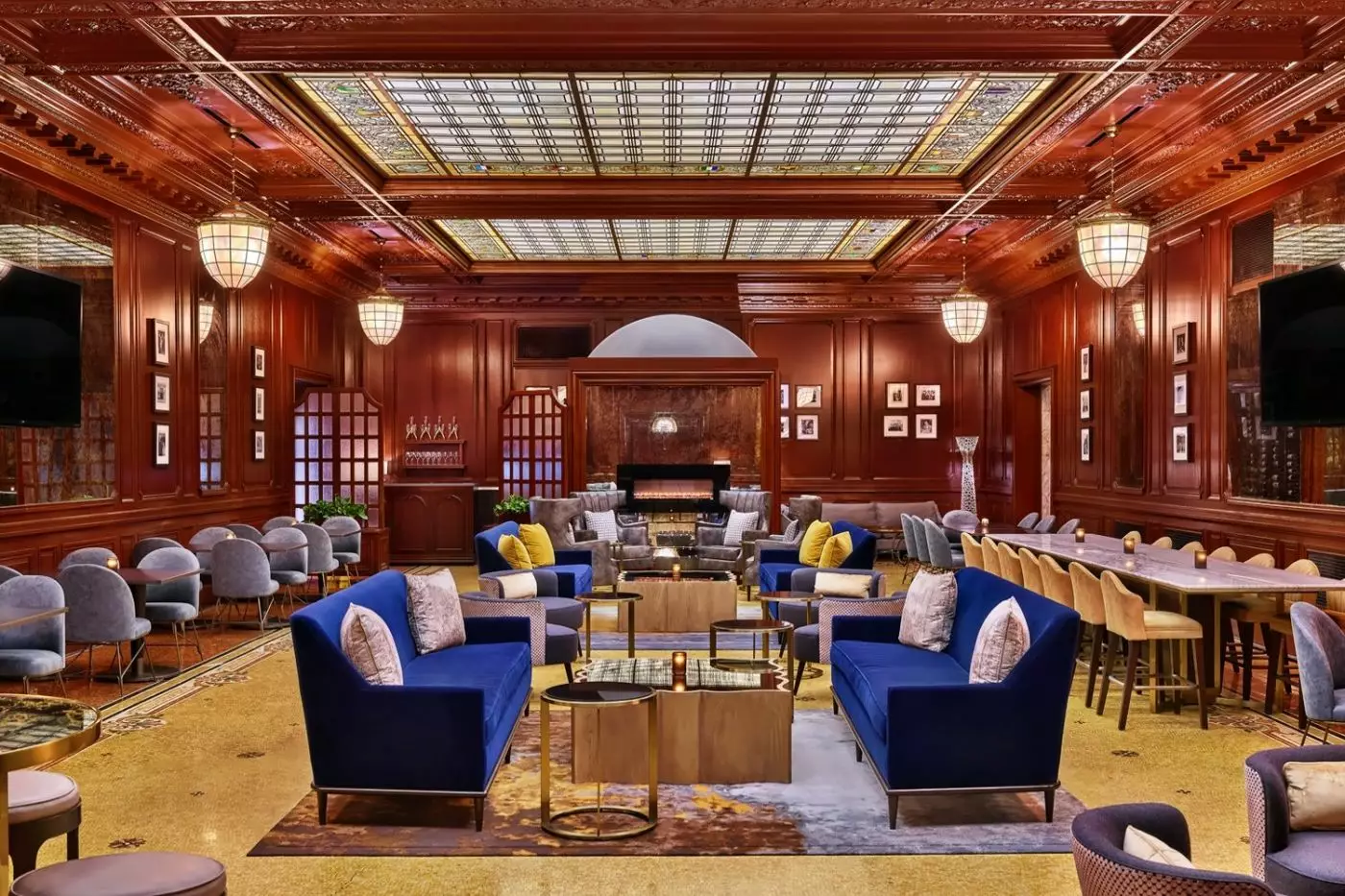
Pied Piper offers a different register. Darker wood and the Parrish mural make the bar feel more contained than the Garden Court, a natural stop for a drink or casual food before heading out. The artwork is not a reproduction added for atmosphere; it has belonged to this room since the hotel's reopening. That connection is what makes a brief visit worthwhile even for guests with dinner reservations elsewhere.
For a lighter pause, the Garden Court Lounge serves drinks and bites beneath the dome, while GC2GO offers a quick option without a seated meal. In-room dining is also listed by the hotel. These choices are useful on a working day, but they need not define every meal. The surrounding downtown neighborhoods and the wider city give travelers plenty of reasons to leave the building. The better rhythm may be to experience the Palace's signature rooms, then make space for San Francisco beyond them.
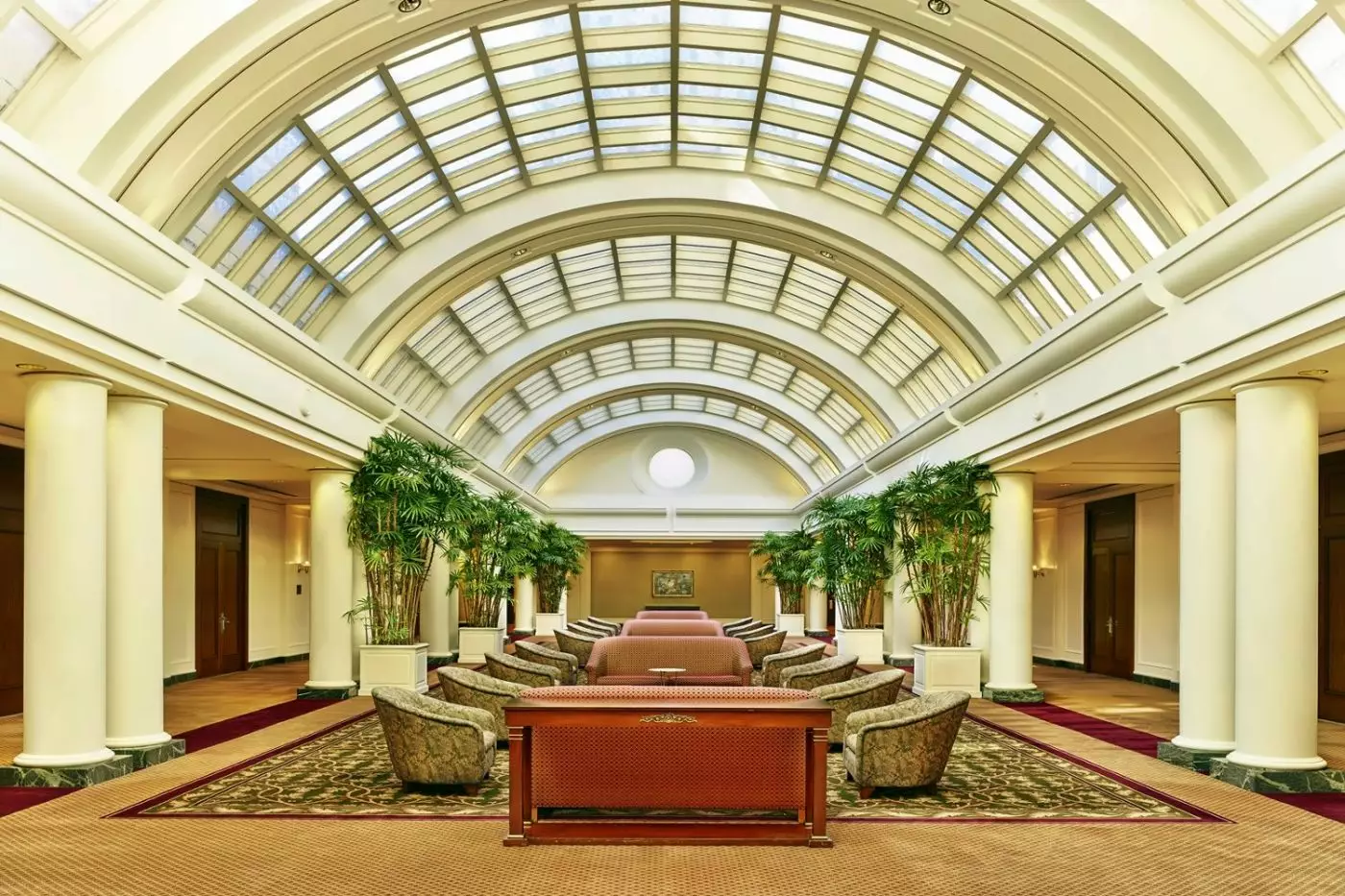
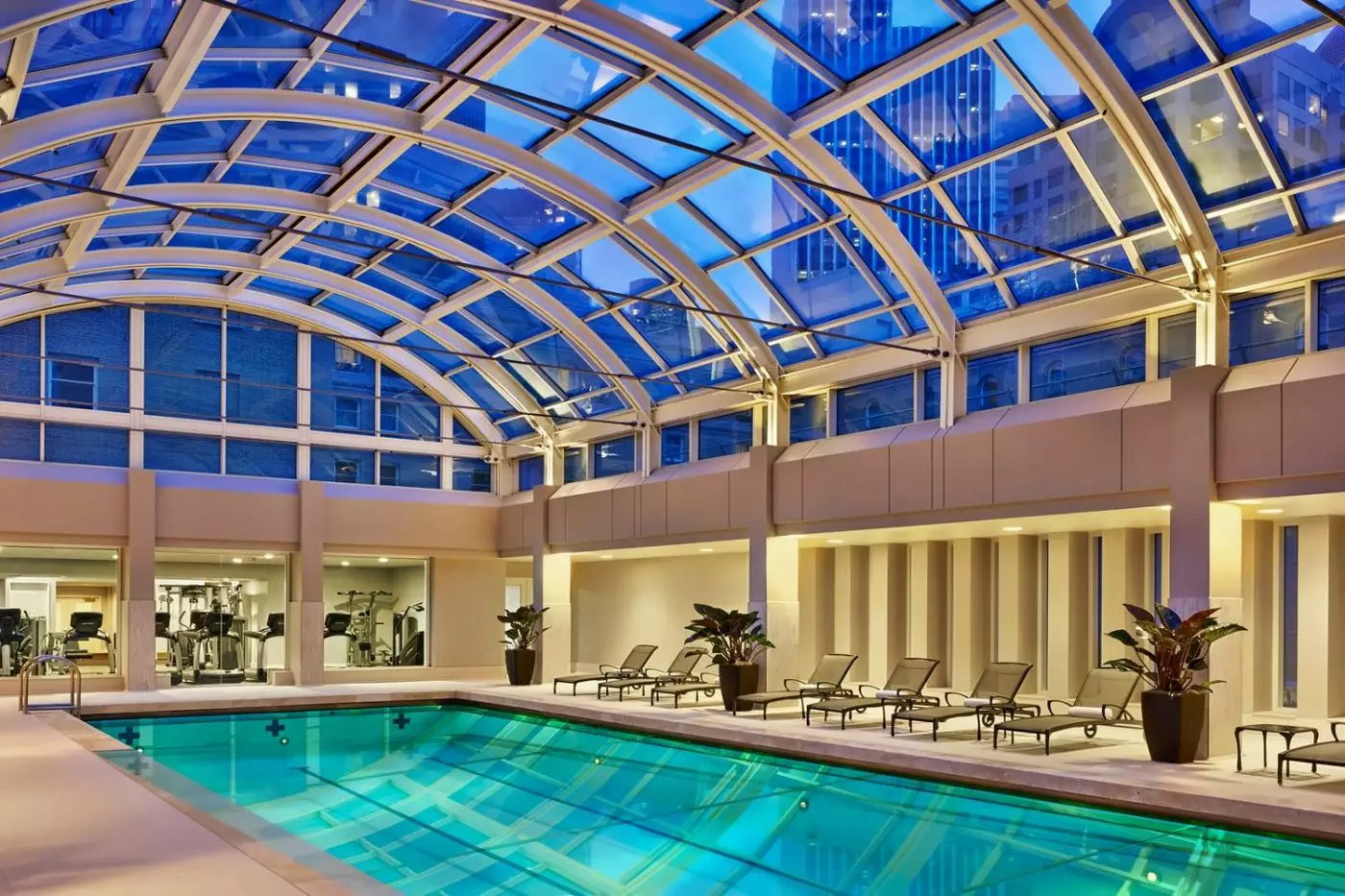
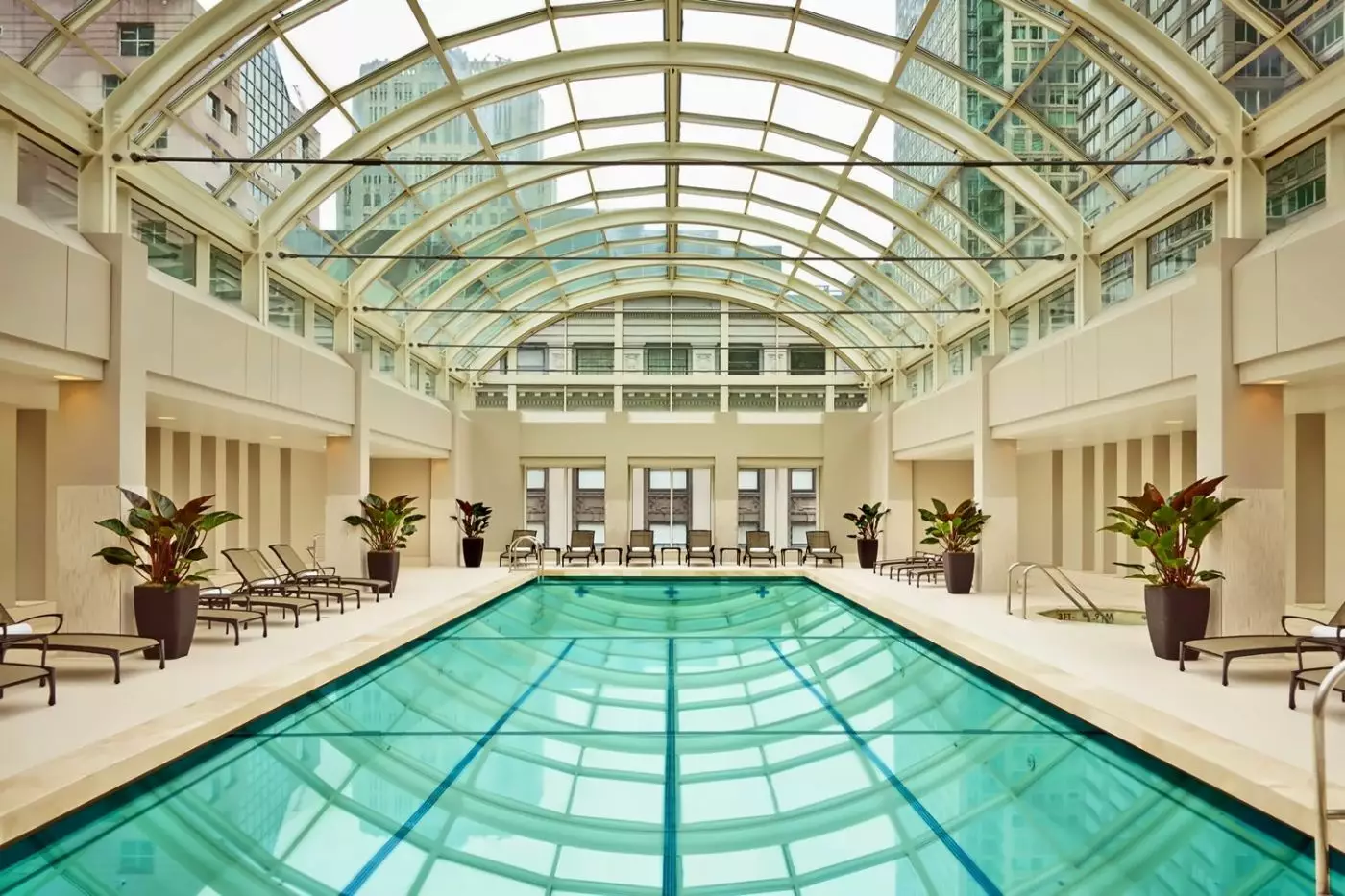
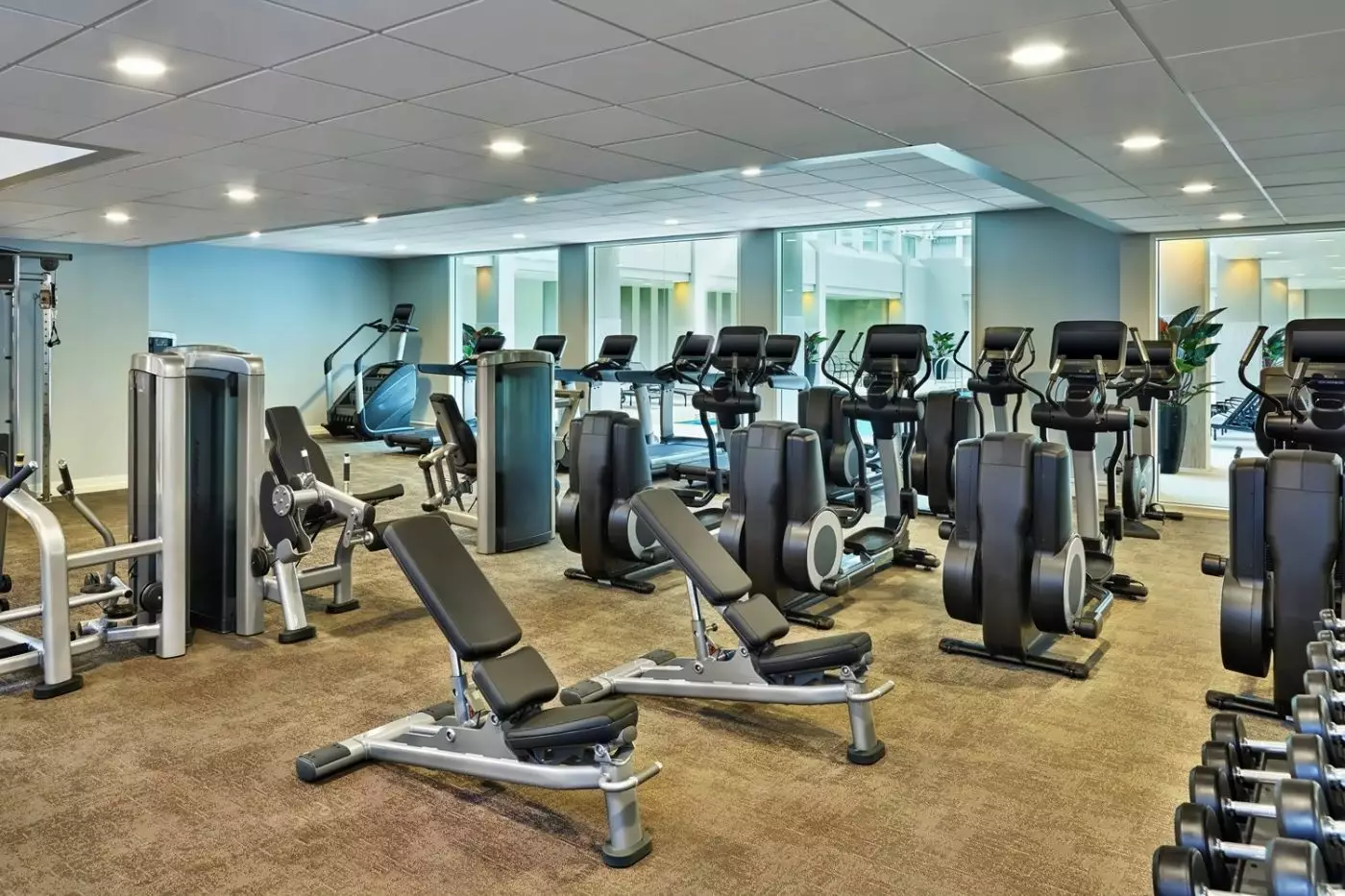
The heated indoor pool is a practical distinction for a downtown stay. Its glass ceiling brings in light, and the adjoining lounge area makes it a place to slow down rather than only swim laps. For families, it adds something to do at the hotel between excursions; for business guests, it offers a break that does not depend on the weather. The fitness center sits nearby and includes cardio and weight equipment, giving regular travelers a familiar routine.
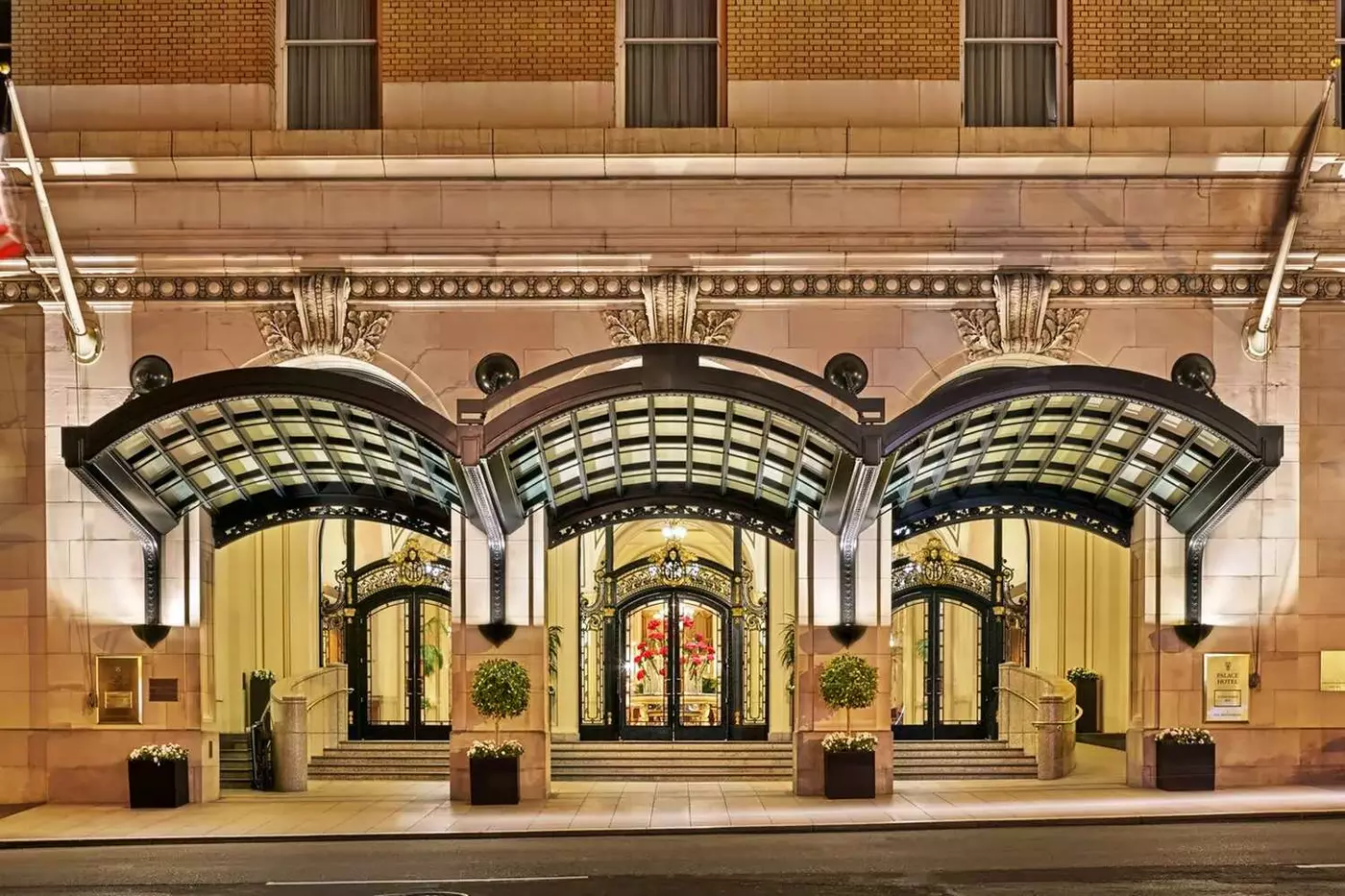
The Palace is also set up for the less picturesque parts of travel: concierge help, meeting space, in-room dining, and a staffed arrival. Those services are especially useful when a trip mixes work and leisure or when plans change during the day. They do not make the hotel secluded. Its public rooms have a life beyond overnight guests, and its downtown streets retain the pace of a business district. Guests looking for stillness throughout the property may feel better elsewhere; guests who enjoy an active grand hotel will understand the appeal.
A Palace stay can be as straightforward as a museum weekend. Walk to SFMOMA, return for a swim, and leave an evening for the bar or a restaurant in another neighborhood. On a business trip, the same address keeps the Financial District and Moscone Center within reach without giving up a sense of occasion at breakfast. For first-time visitors, Union Square, Chinatown, the Ferry Building, and transit connections offer several ways to begin exploring.
Leave some uncommitted time for the hotel. See the Garden Court in daylight, look closely at the mural in Pied Piper, and notice how the public rooms carry the Palace's history into an otherwise modern itinerary. Its rooms and facilities support a comfortable city stay, but its strongest argument is the combination of downtown usefulness and a building with a story of its own. That is the experience to book, rather than an imagined boutique retreat or resort by the water.
First opened in 1875 and rebuilt after the 1906 fire, the Palace links today's stay to a defining chapter of San Francisco history.
A heated indoor pool beneath glass gives guests a restorative option between city outings, a welcome extra in a full-service downtown hotel.
At Pied Piper, Maxfield Parrish's mural has hung in its namesake bar since 1909, giving a simple drink an unexpected artistic backdrop.
2 NEW MONTGOMERY STREET
Playing this video may share data with YouTube. Please see our Privacy Policy.
More amenities
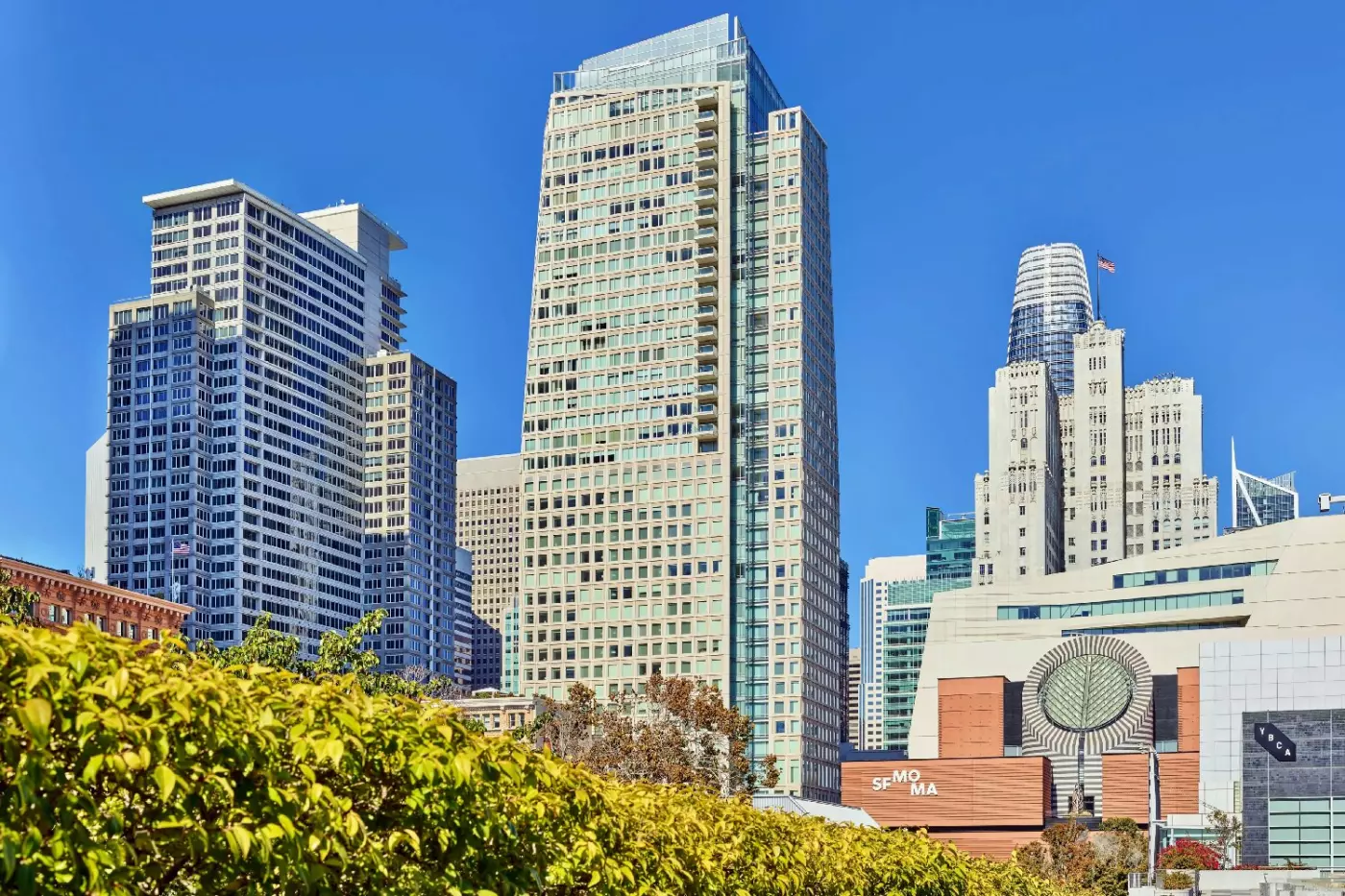
At The St. Regis San Francisco, the art itinerary begins at the front door. The hotel occupies the Williams Building at 125 T...
More amenities
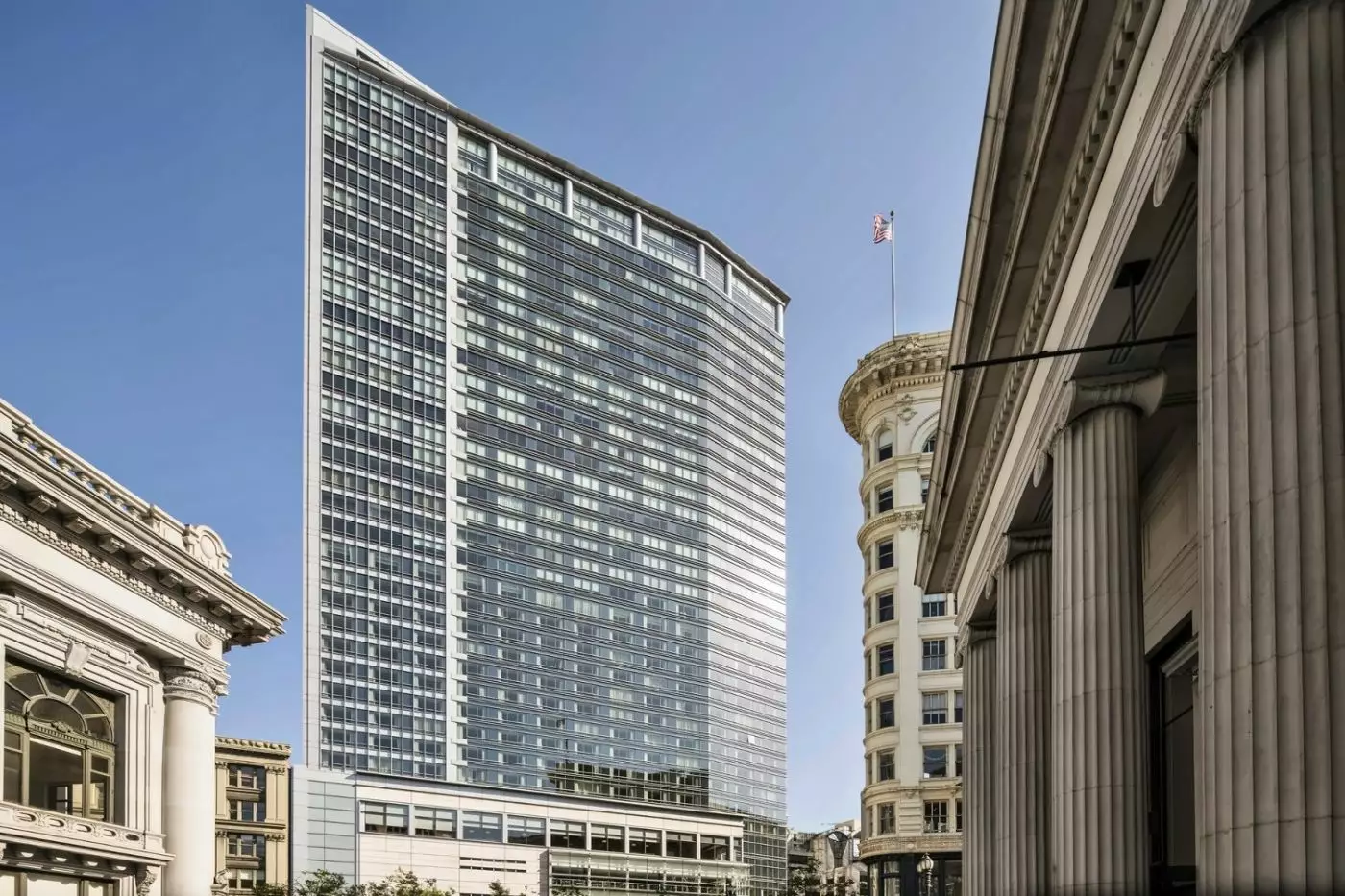
Four Seasons Hotel San Francisco sits at 757 Market Street, between Union Square, SoMa, the Financial District and the museum...
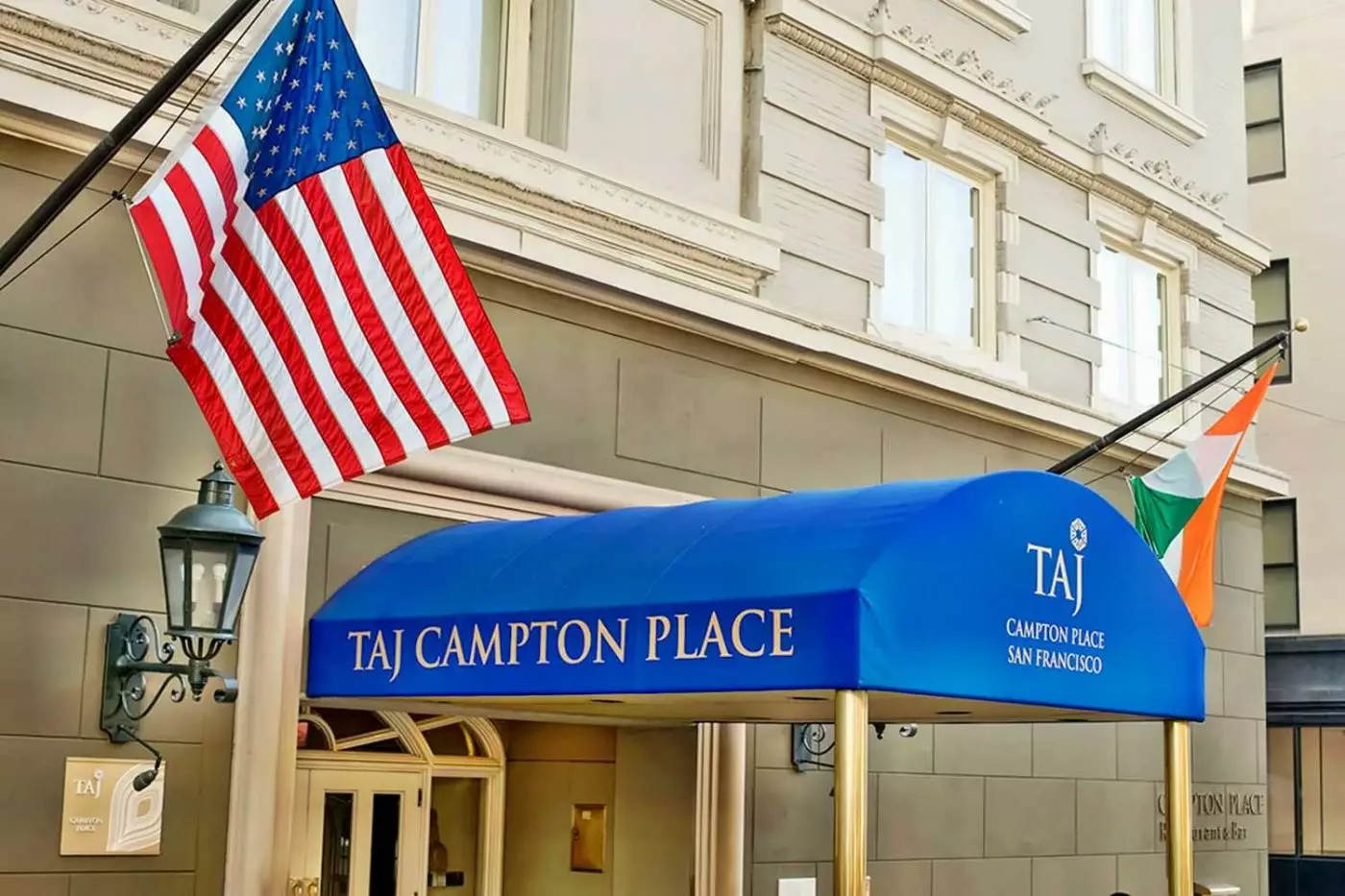
Union Square is just outside Taj Campton Place's door at 340 Stockton Street. Shops, galleries and downtown offices are close...